
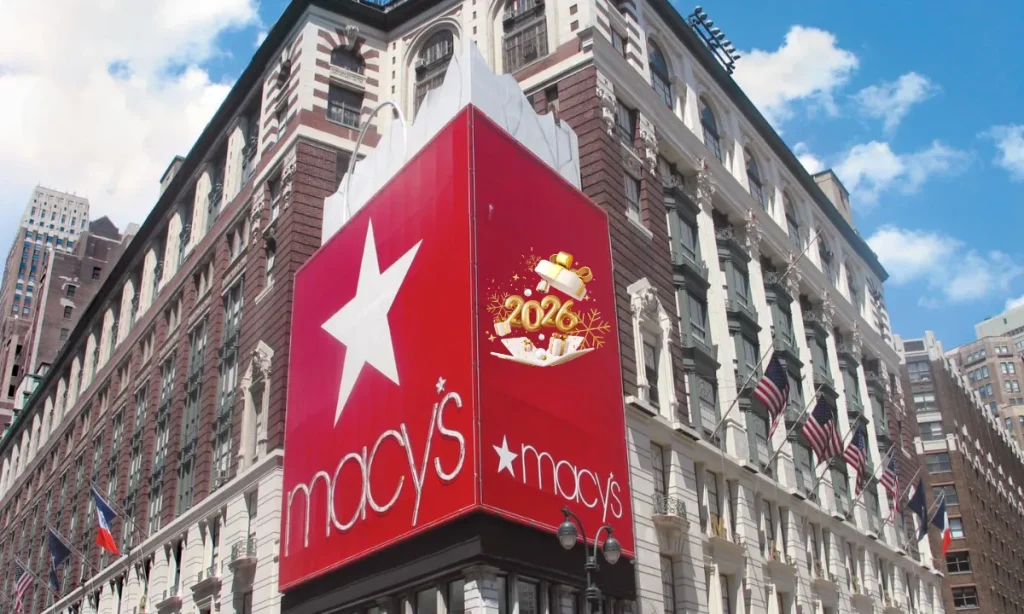

The retail landscape in the United States is undergoing one of its most significant transformations in decades. As consumer habits continue to shift toward online shopping, rising operating costs squeeze margins, and companies rethink long-term strategies, several of America’s biggest retail chains have confirmed widespread store closures stretching through 2025 and into 2026.
These decisions signal not just cost-cutting moves, but a fundamental reshaping of how and where Americans shop. From department stores and supermarkets to luxury outlets and specialty retailers, closures are affecting nearly every corner of the retail sector.
Macy’s Accelerates Its Store Closure Plan
One of the most impactful announcements comes from Macy’s, a historic name in American retail. In January 2025, the company revealed plans to close 150 stores by 2026, marking one of the largest downsizing efforts in its history.

By the end of 2025, Macy’s will have already shut at least 66 locations, leaving the chain with roughly 350 stores nationwide once the full plan is completed. The company says the strategy is designed to focus resources on its strongest-performing locations while accelerating investment in its digital and omnichannel platforms.
Executives have emphasized that shoppers are increasingly engaging online and through fewer, higher-quality physical locations. Rather than maintaining a large but uneven store footprint, Macy’s is betting that a leaner network paired with stronger e-commerce capabilities will ensure long-term sustainability.
Kroger Shuts “Unprofitable” Supermarkets
The grocery sector is not immune to these pressures. Kroger, one of the largest supermarket operators in the country, confirmed in June 2025 that it would close 60 underperforming stores over an 18-month period.
The closures officially began in September 2025. According to its latest annual report, Kroger operates 2,731 supermarkets across 35 states and Washington, D.C. While that number remains substantial, the company is now prioritizing profitability and operational efficiency over sheer scale.
Rising labor costs, inflation-driven supply expenses, and fierce competition from discount and online grocery platforms have forced Kroger to reassess locations that fail to meet performance benchmarks. The company maintains that affected employees will be offered opportunities to relocate where possible.
Newell Brands Cuts Stores and Jobs
The restructuring trend extends beyond food and department stores. Newell Brands announced in December 2025 that it would close 20 Yankee Candle stores across the United States and Canada starting in January 2026.
Alongside store closures, the company is reducing its workforce by more than 900 employees as part of a broader productivity and efficiency initiative. CEO Chris Peterson described the move as a “disciplined step” aimed at delivering stronger and more consistent performance in a challenging retail environment.
The decision highlights how even well-known lifestyle and home-fragrance brands are being forced to streamline physical retail operations while leaning more heavily on wholesale and online sales channels.
Luxury and Specialty Retail Feel the Impact
Luxury and discount-luxury retailers are also adjusting their footprints. Saks Off 5th confirmed that it will close stores in nine locations in early 2026. The company says the move will allow it to better position itself for long-term growth, focusing on markets with stronger demand and higher profitability.
Specialty retailers in the outdoor and sporting goods segment are making similar choices. REI announced plans to close three stores during 2026. The first closure will take place in New Jersey in the first quarter, followed later in the year by prominent locations in SoHo, New York, and Boston.
REI has stated that changing shopping behaviors and the high cost of operating large urban storefronts played a role in the decision.
Why So Many Stores Are Closing
Retail executives broadly agree on the underlying causes behind the wave of closures:
- Shifts in consumer behavior, with more shoppers favoring online and mobile purchasing
- Rising operating costs, including rent, utilities, and wages
- Overexpansion in previous decades, leaving companies with too many underperforming locations
- Increased competition from e-commerce giants and discount retailers
Rather than signaling the end of physical retail, these closures reflect a recalibration. Companies are narrowing their focus to stores that deliver strong sales, meaningful brand experiences, and seamless integration with digital platforms.
What does this mean for Shoppers and Workers?
For consumers, the closures may mean fewer nearby stores but more emphasis on online convenience, faster delivery, and improved digital experiences.
For workers and local communities, however, the impact can be more immediate and difficult, with job losses and vacant retail spaces affecting local economies.
Industry analysts expect more announcements in 2026 as retailers continue to evaluate performance and adapt to market realities.
An Industry in Transformation
The wave of mass store closures scheduled through 2026 underscores a retail industry in transition rather than decline. Survival increasingly depends on efficiency, profitability, and digital strength, not the size of a store network.
As Macy’s, Kroger, Newell Brands, Saks Off 5th, and REI reshape their operations, one thing is clear: the future of retail will be leaner, more data-driven, and far more focused on how modern consumers choose to shop.
FAQs
Why are stores closing in 2026?
Rising costs, lower foot traffic, and a strong shift toward online shopping are forcing retailers to shut underperforming locations.
Which major retailers are closing stores?
Key chains include Macy’s, Kroger, Newell Brands, Saks Off 5th, and REI.
Are these closures permanent?
Yes, most closures are permanent and part of long-term restructuring plans.
How will shoppers be affected?
Fewer nearby stores, but stronger online services, delivery options, and digital shopping experiences.